Multifamily operators should not have to become AI experts just because they decided to use AI. Yet too often, some vendors expect them to.
Over the last year, we have watched property management companies identify an operational problem, evaluate AI technology, choose a platform, and roll it out across their portfolios. Then the responsibility shifts. The technology is live, but the operator is left to figure out how to implement it successfully, monitor its performance, identify when something goes wrong, and determine how to improve it over time.
In other words, the operator buys the AI and then inherits the responsibility of becoming the AI expert.
This is not how it should work. We repeat: this is not how it should work. There’s a better way. Here’s what we believe AI partnership should look like for multifamily operators.
What an AI Vendor Should Do For You
Someone needs to monitor performance. Someone needs to identify when an interaction did not go as expected. Someone needs to evaluate whether the AI handed a conversation to an onsite team member at the right time. Someone needs to determine whether workflows still match the property’s processes. Someone needs to understand why results changed.
Before long, the operator who purchased AI to solve an operational problem has inherited another operational responsibility: managing the AI itself.
That should not be the standard.
Operators absolutely have a role in successful AI adoption. They need clear goals, strong processes, internal ownership, and teams that understand where AI fits into their work. But operators should not have to develop the same level of AI expertise as the companies building the technology.
That is where the vendor brings unique value. At Nurture Boss, we work across property management companies, markets, and asset types, including conventional multifamily, student housing, active adult, and senior living. That gives us visibility into AI interactions and operational patterns across environments that no single property management company could reasonably replicate on its own.
We can see what works, where friction emerges, when workflows need to change, and where AI needs additional guidance. That broader perspective should translate into better recommendations for every operator we serve.
It has shaped one of our strongest beliefs about the next phase of AI adoption in multifamily: Your AI vendor should be your AI expert.
Enjoying This Read?
Nurture Boss’s CEO and AI Engineer Jacob Carter discusses the role of an AI vendor more in depth on the Apartment Department podcast.
Listen NowAI Implementation Is Only the Beginning
Multifamily has spent the last several years talking about AI adoption. Which AI vendors should I pilot? Where should I automate? Which use cases create meaningful value?
Those questions still matter, but the conversation needs to move forward. Once an organization deploys AI, a more difficult question appears: Who makes sure it continues to work?
AI adoption is not a finish line. It is an operational capability that requires implementation, training, measurement, change management, and ongoing optimization. Processes change. Properties change. Teams change. Prospect and resident behavior change. The information available to AI changes. The technology itself continues to change.
A successful implementation on day one does not guarantee a successful implementation on day 300. Operators need visibility into performance, but they should not have to discover every problem themselves.
Imagine a resident has a poor interaction with an AI system. The resident tells someone onsite. The onsite employee tells a regional manager. The regional manager raises the issue with someone at corporate. Eventually, the concern reaches the technology provider.
By that point, the vendor is the last person to know about a problem happening inside its own technology. The better model reverses that process.
The technology provider monitors performance, identifies unusual behavior, surfaces problems and helps the operator address them before those problems travel through five layers of the organization. That is what partnership should look like in an AI-driven operating environment.
Think About the Check Engine Light
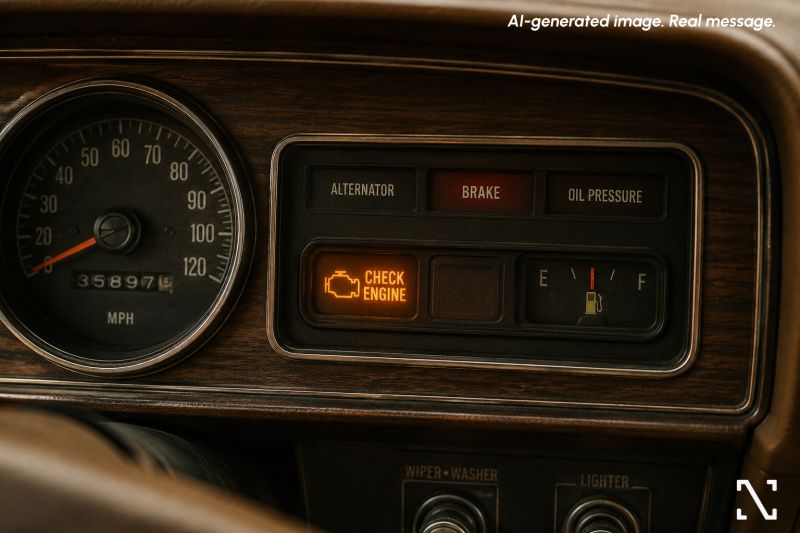
Most people drive cars without understanding exactly how their engines work.
They don’t know how to rebuild a transmission. They cannot diagnose every electrical problem. Many drivers cannot explain what half of the components under the hood actually do, but we still drive.
The expectation is not that drivers become automotive engineers. The system gives them enough information to know when something requires attention. The check engine light comes on.
That simple signal changes the driver’s responsibility. The driver does not have to diagnose the underlying mechanical problem. The driver needs to recognize the signal and take the car to someone who can. AI platforms need their own version of the check engine light.
Operators need visibility. They need to know whether the technology is producing the intended outcomes, where intervention may be necessary and what decisions require their input.
Operators shouldn’t have to solve problems they don’t have the expertise to diagnose. Your AI provider should surface those problems, bring the expertise to diagnose them, and then fix them.
Operators Should Know the Outcome, Not Every Technical Detail
As AI becomes more sophisticated, asking operators to develop deep expertise in the underlying technology becomes increasingly unrealistic.
Operators should understand what problem an AI system solves, how it interacts with prospects or residents, when it hands work to people, and how the organization measures success.
That does not mean the operator needs to understand every technical mechanism that makes the system work. The same principle applies throughout property management.
Operators rely on specialists because specialization allows people to develop expertise that would be difficult for every organization to recreate internally. AI should work the same way.
The companies building these systems spend thousands of hours developing, testing, monitoring, and improving them. They see patterns across implementations that an individual operator cannot see from one portfolio.
That perspective creates an obligation. AI vendors should not simply provide software. They should provide guidance about how to use it successfully.
The Human Handoff Deserves Particular Attention
One of the most important areas for vendors and operators to monitor together is the point where AI stops and a person takes over.
Good AI does not remove people from the experience. It helps determine where people can create the most value.
A prospect might ask a question that requires judgment. A resident might have a sensitive concern. A leasing conversation might reach a point where an onsite professional can recognize an objection, understand the context and move the relationship forward.
The goal should not be to maximize the percentage of interactions completed without a human. The goal should be to create the best outcome.
That requires understanding whether handoffs happen at the right time, whether onsite teams receive enough context to take over effectively and what happens after the human interaction ends. It also creates an opportunity to recognize great work.
If AI handles repetitive communication and an onsite team member steps into a conversation, resolves an issue, or helps close a lease, technology should make that contribution more visible, not less.
AI should help organizations understand where their people make a difference.
Measurement Has to Extend Beyond Deployment
We believe an AI provider’s job doesn’t end when the technology goes live. In many ways, that’s when the real work begins.
AI requires ongoing attention. Performance needs to be measured, gaps need to be surfaced, and strategies need to evolve as an operator’s business changes. Operators shouldn’t have to discover those opportunities on their own.
That’s why ongoing support should be proactive, not reactive. Your provider should be looking at performance alongside you to identify what’s working, to flag what isn’t, and bring recommendations before you have to ask.
The specific metrics will vary. It could be prospect engagement, tour activity, response consistency, resident communication, human handoffs, or something else entirely. What matters is continually asking: What are we trying to improve? What’s working? Where are the gaps? Are we achieving our outcomes?
Deployment shouldn’t be the finish line. The best AI partnerships keep working to improve the technology and the outcomes it produces over time.
AI in Multifamily Requires a Different Vendor Relationship
For years, the software industry worked toward a compelling promise: make technology so simple that operators barely need to think about it.
There is value in simplicity. Technology should be intuitive. Teams should not spend hours navigating complicated systems or searching through reports to find basic information. But simplicity should not be confused with absence of ownership.
AI touches communication, decision-making, workflows and resident experiences. That makes ongoing oversight important. The best vendor relationship will increasingly look less like a software subscription and more like a partnership around an operational capability.
The operator brings the business context. They understand their properties, residents, teams, processes, and goals. The vendor brings the AI expertise. They understand the technology, monitor how it performs, identify opportunities for improvement and help translate new capabilities into practical operational value.
Neither side succeeds alone.
Hold AI Vendors to a Higher Standard
Multifamily executives should expect more from AI companies.
Ask how a vendor measures performance after implementation. Ask how they identify problems. Ask what happens when AI needs to hand an interaction to a person. Ask how the vendor helps optimize workflows over time. Ask who monitors the system and what information gets surfaced to your team.
Most importantly, ask what responsibility the vendor believes it has after the contract is signed and the technology goes live.
AI will continue to become more capable. That should not require every property manager, marketer, regional leader and operations executive to become an AI engineer. Their expertise belongs elsewhere.
The goal should be to give multifamily teams technology they can understand, trust, and use to produce better outcomes while giving them access to experts who understand what is happening under the hood.
Operators should absolutely learn how AI changes their business. They just should not have to build the engine to drive the car.
Continue Learning about AI
Explore Jacob Carter’s Amazon book, AI in Property Management: A Practical, Unboring Look at Artificial Intelligence in the Multifamily Industry, and discover practical strategies for implementing AI across leasing, marketing, resident communication, and operations.
Get the Book on Amazon